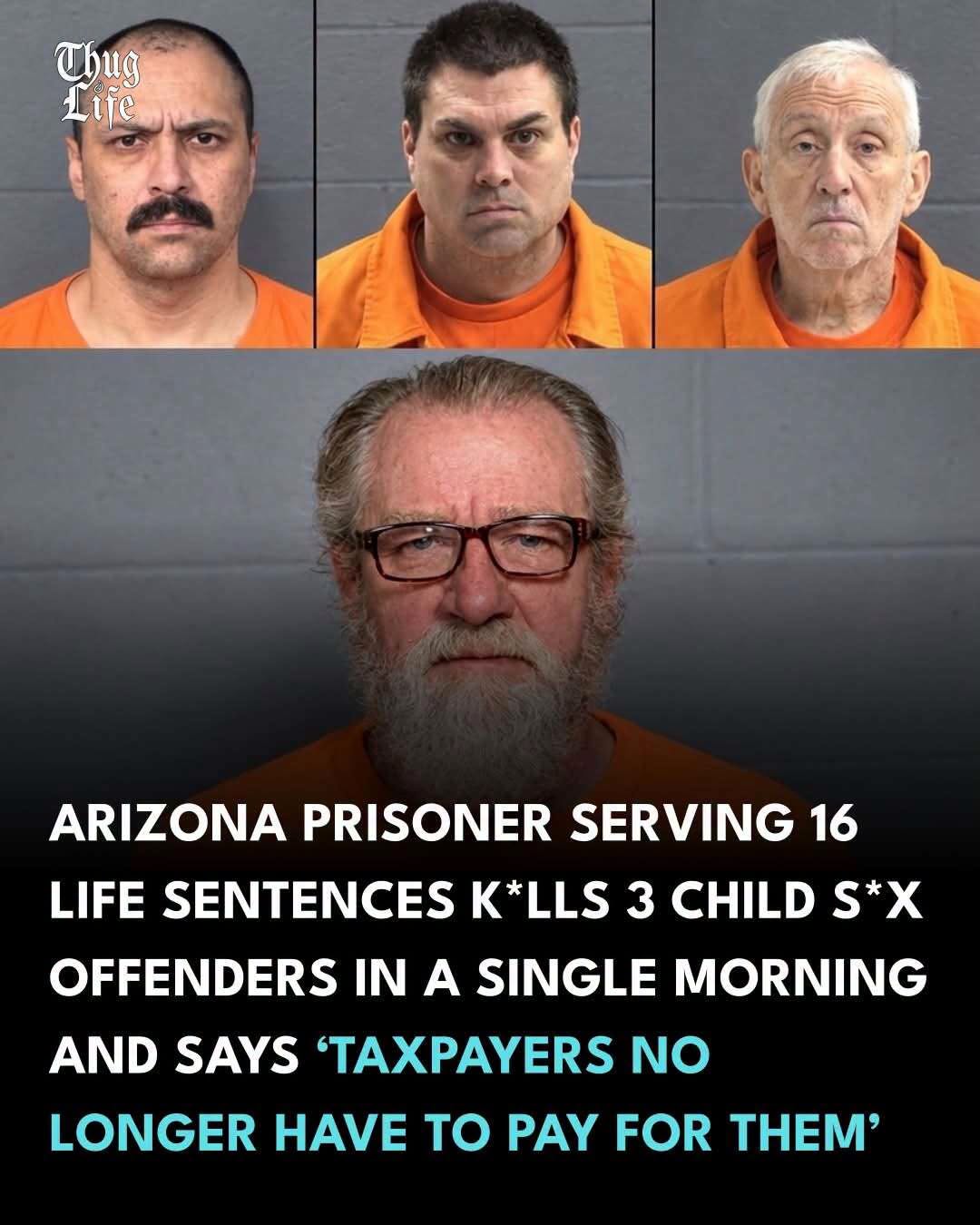
A violent incident at the Arizona State Prison Complex-Tucson has drawn renewed attention to the long and disturbing criminal history of inmate Ricky Wassenaar, who is accused of killing three fellow prisoners inside the facility’s Cimarron Unit on April 4.
Wassenaar, 63, was already serving 16 consecutive life sentences when the killings occurred. His original convictions stem from a notorious 2004 hostage standoff at the Lewis Prison in Buckeye, Arizona. During that incident, Wassenaar and another inmate held two correctional officers captive for 15 days in an event that became one of the most serious prison incidents in the state’s history.
He was ultimately convicted on 19 counts, including kidnapping and sexual assault, and received multiple consecutive life sentences. Despite spending decades behind bars, Wassenaar later became involved in another deadly confrontation within the Arizona prison system.
According to reports surrounding the April 4 incident, Wassenaar killed three fellow inmates at the Cimarron Unit. Details surrounding exactly how the killings occurred, what led to the confrontation, and whether other prisoners or correctional officers were involved remain subject to investigation.
What has drawn particular attention, however, are comments attributed to Wassenaar after the killings. When speaking with a reporter afterward, he reportedly said that his only regret was “not killing more.”
The alleged statement has intensified scrutiny of Wassenaar and his history of violence. Coming from a prisoner already serving multiple life sentences for a previous hostage crisis and serious criminal convictions, the reported comments have raised questions about prison security, inmate supervision, and how such an incident could occur inside a maximum-security correctional environment.
The identities of the three inmates who died and additional details about their backgrounds were not immediately included in the initial reports. Authorities are expected to investigate the circumstances surrounding each death, including what happened before the violence, how prison staff responded, and whether there were warning signs that could have prevented the attack.
Incidents involving violence between inmates can be difficult for correctional authorities to prevent, particularly in facilities housing prisoners with lengthy or violent criminal histories. Prison officials must balance security measures with the need to manage large populations of inmates under highly controlled conditions.
Wassenaar’s earlier history makes the case especially notable. The 2004 hostage standoff lasted 15 days and involved the confinement of two correctional officers. His resulting convictions and multiple life sentences meant that he was already expected to remain incarcerated for the rest of his life.
The latest incident therefore did not involve a prisoner approaching release or attempting to escape. Instead, it occurred inside the prison system where Wassenaar was already serving his sentences.
Authorities will now face questions about the circumstances surrounding the three deaths and whether additional security measures will be implemented at the Cimarron Unit. Investigators may also examine whether Wassenaar acted alone, whether the victims were specifically targeted, and what events immediately preceded the violence.
For the families and loved ones of the three victims, the incident represents another devastating loss. Their deaths have also renewed broader concerns about violence behind prison walls and the challenges officials face when managing inmates convicted of serious crimes.
As the investigation continues, officials are expected to release additional information about the victims, the circumstances of the killings, and any charges or disciplinary action resulting from the incident.
The case serves as a stark reminder that serious violence can occur even within highly secured correctional facilities. Wassenaar’s alleged comments following the killings have added another disturbing dimension to an already extraordinary criminal history.