Connection Over Convention: The Story of Yuki and Kenji
Introduction
When 26-year-old Yuki announced her decision to marry 70-year-old Kenji, the response from her friends and the wider public was immediate and intense. The contrast in their ages fueled speculation and surprise, leading to questions about the motives behind their union. One of Yuki’s friends candidly asked, “Girl, is he rich-rich?” However, Yuki’s conviction in her relationship was unwavering. This is the story of how two people found companionship far outside conventional boundaries and how they responded to the world’s curiosity.
Meeting Amid Uncertainty: The Beginnings of Yuki and Kenji
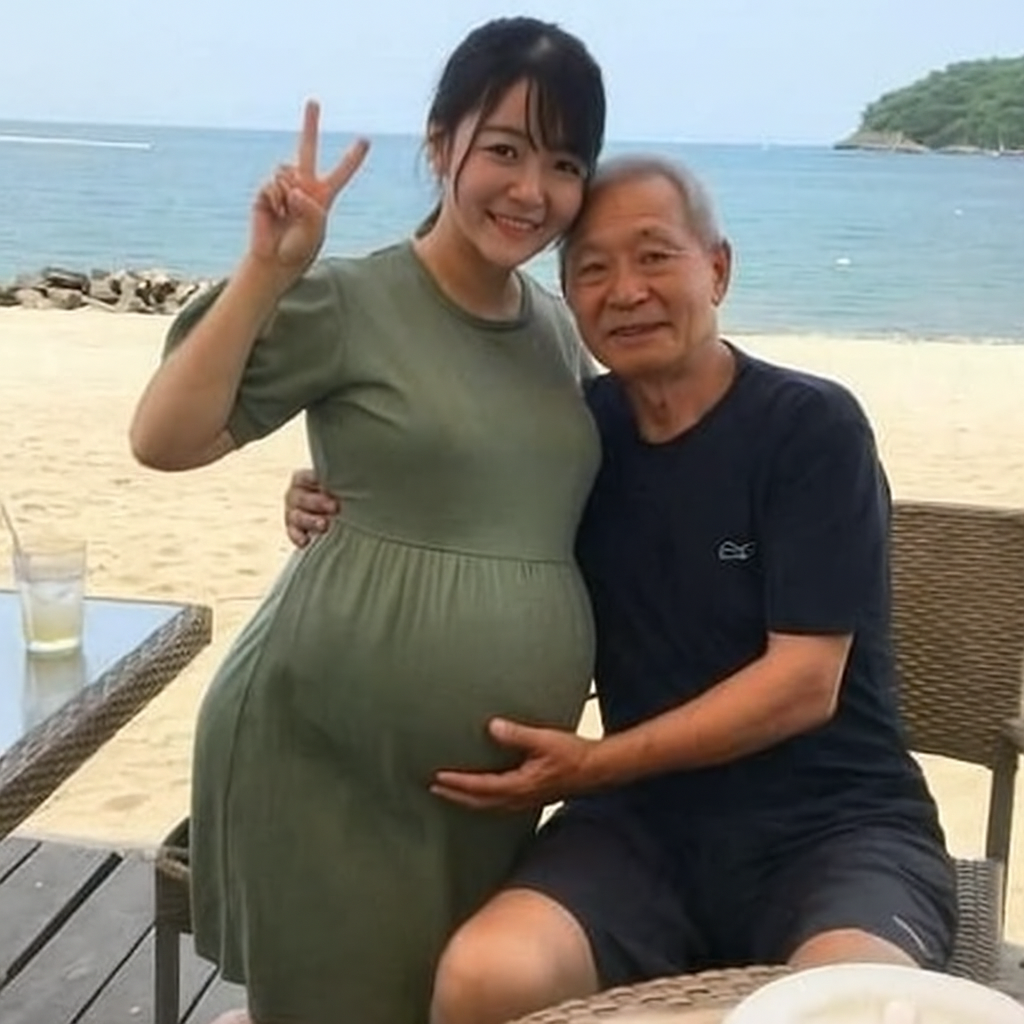
Yuki met Kenji during a particularly difficult period while visiting Okinawa. Struggling with feelings of isolation, she encountered Kenji, a retired physics professor, on a serene beach. Their first meeting was simple—Kenji offered her lemonade, shade, and a listening ear. What started as a gesture of kindness quickly grew into a supportive friendship. Over the following days, the pair spent time together walking along the shore, exchanging stories, and dancing barefoot to classic Elvis songs.
Kenji’s approach to life stood out. He wove insight and humor into his conversations, remarking, “I’ve lived long enough to know that most people are full of it. You’re not. That’s rare.” These words resonated with Yuki, who found comfort in his sincerity.
Choosing Peace Over Drama: The Rapid Progression
Within ten days of meeting, Yuki and Kenji decided to get married. Their decision was swift and surprised those around them. Rather than being motivated by scandal or drama—as some suspected—Yuki stated she found ‘peace’ in Kenji, a sense of emotional security she had long sought. The couple’s marriage was not an act of rebellion against social expectations but a step toward realizing personal happiness.
Societal Reactions and Viral Conversations
As news of their unconventional union spread online, public reaction was diverse and often polarized. Some social media users accused Yuki of being a gold digger, while others celebrated Kenji for his charm and wisdom. One commentator humorously remarked, “This gives me hope. I’m 34 and just got ghosted by a guy who owns three swords and no bed frame.” Yuki responded succinctly, “Age is just a number. Unless it’s your cholesterol — that number matters.”
These responses reflect a broader societal discomfort with age-gap relationships, especially those in which the younger partner is a woman. Skepticism frequently arises regarding the authenticity of such unions and the possibility of ulterior motives like financial security or status. Psychology experts observe that while unusual, large age-gap relationships are not uncommon and often require a greater degree of emotional maturity, mutual respect, and shared values compared to relationships where partners are closer in age.
Internationally, attitudes toward age-gap relationships vary widely. Western societies tend to be more critical, often concerned with issues of power dynamics, agency, and consent. In some East Asian countries, respect and honor associated with elders can influence perceptions, making such relationships less controversial in certain contexts. Sociological research reveals that, regardless of culture, couples in age-gap relationships can face substantial social scrutiny and sometimes isolation.
Psychological Factors: The Dynamics of Age-Gap Relationships
Analyzing the factors that contribute to the success of partnerships like Yuki and Kenji’s reveals several key elements. Communication is paramount; couples must navigate generational differences in values, interests, and life stages. Joint activities—such as painting, walking, or dancing—help bridge the age divide and reinforce shared joy.
Expert opinion from relationship psychologists highlights that age can present challenges, particularly in long-term planning around health, retirement, and family. Nevertheless, emotional compatibility, trust, and affection can outweigh chronological considerations. Dr. Lisa Diamond, a clinical psychologist specializing in interpersonal relationships, notes, “While age differences pose unique hurdles, individuals who prioritize emotional connection, mutual support, and personal growth often see these challenges as opportunities rather than obstacles.”
Kenji’s background as a physics professor contributed to the intellectual and humorous nature of their connection. The difference in life experience provided a perspective and wisdom that Yuki appreciated. Couples with significant age gaps may benefit from complementary personalities, with one partner offering stability and counsel, and the other bringing energy and fresh outlooks.
Internet Culture and Modern Relationship Narratives
The viral nature of Yuki and Kenji’s story speaks to evolving perceptions about what constitutes a valid partnership. Social media plays a critical role in amplifying stories that deviate from the norm, flattening geographical and cultural distances. Jokes and memes about age-gap relationships circulate widely, contributing to both stigma and normalization.
Online commentary often highlights anxieties and hopes prevalent among singles. Responses like “This gives me hope…” reveal a broader yearning for authenticity and connection, regardless of age or status. Relationship experts argue that the digital landscape is rapidly reshaping how people judge, discuss, and ultimately understand romantic relationships.
Conversely, negative reactions—such as accusations of financial motive—demonstrate persistent stereotypes that can make couples like Yuki and Kenji targets for online harassment or ridicule. Advocacy groups urge greater empathy and privacy for those choosing unconventional paths, noting that dialogue should focus on consent, wellbeing, and respect.

Everyday Life One Year After: Embracing the Slow Life
One year after their wedding, Yuki and Kenji continue to build a life grounded in creativity, gratitude, and simplicity. Yuki blogs about their daily experiences under the title “Love, Lemonade & Kenji.” She describes gardening mishaps, marathon sessions of binge-watching ‘Bridgerton,’ and Friday pancake nights—events emphasizing the gentle routines of shared domesticity.
The couple split their time between Japan and Oregon, fostering a lifestyle rich in cultural exchange. They paint, write, and immerse themselves in both local and international communities. Rather than attempting to prove something to the outside world, Yuki and Kenji focus on cultivating calm and meaning in their own lives.
Yuki’s blog entries invite readers to witness the fulfillment found in ordinary moments. These posts have drawn a supportive following, inspiring others to question assumptions about what makes a relationship legitimate or meaningful.
Cultural Context: Comparing Global Perspectives
Age-gap marriages are not a new phenomenon, but their prominence and acceptance vary depending on geography and culture. In Japan, marriage norms have evolved over decades, with contemporary attitudes increasingly valuing individual happiness over tradition. This transition has paved the way for more diverse relationships, including those with significant age differences.
In the United States, media exposure has led to public debates over the ethical and psychological implications of age-gap partnerships. Researchers at the Pew Research Center note that Americans are, on average, less approving of marriages with wide age disparities but more tolerant than ever before due to shifts in social values. Globally, countries like France and Brazil exhibit their own standards and beliefs surrounding age in relationships, often tied to historical, legal, and cultural factors.
Across cultures, the core values of respect, agency, and affection remain vital in determining public acceptance. The intersection of tradition, modernity, and personal freedom informs both scepticism and support for couples like Yuki and Kenji.
Expert Views and Conclusions on Relationship Authenticity
Relationship experts emphasize that authenticity is critical to long-term happiness. Age compatibility is only one factor among many—others include emotional maturity, communication, shared interests, and life goals. Successful partnerships depend on the willingness of both individuals to grow together and support each other through challenges.
Research published in the Psychology Today suggests that while age-gap relationships statistically encounter more outside judgment, partners who cultivate trust and a sense of belonging tend to overcome social pressures. Couples who celebrate differences rather than conceal them often set positive examples for broader communities.
Yuki and Kenji’s story draws attention to the importance of emotional wellbeing, honesty, and self-determination. For them, finding calm amid chaos was more valuable than conforming to social expectations. The viral response to their marriage reveals both enduring prejudices and a profound desire among many for authentic connection.
Looking Forward: Changing Attitudes and the Power of Personal Stories
The global discourse on age-gap relationships is gradually evolving, driven by increased visibility and open conversation. Stories like Yuki and Kenji’s challenge stereotypes and invite examination of what truly matters in partnership. As society continues to shift toward greater acceptance, the experiences of couples who defy convention become important sources of learning and empathy.
Whether viewed from a sociological, psychological, or cultural perspective, the journey of Yuki and Kenji underlines the diversity of human relationships. Their narrative highlights that peace, comfort, and authenticity can exist beyond age-related boundaries, inspiring others to pursue joy on their own terms