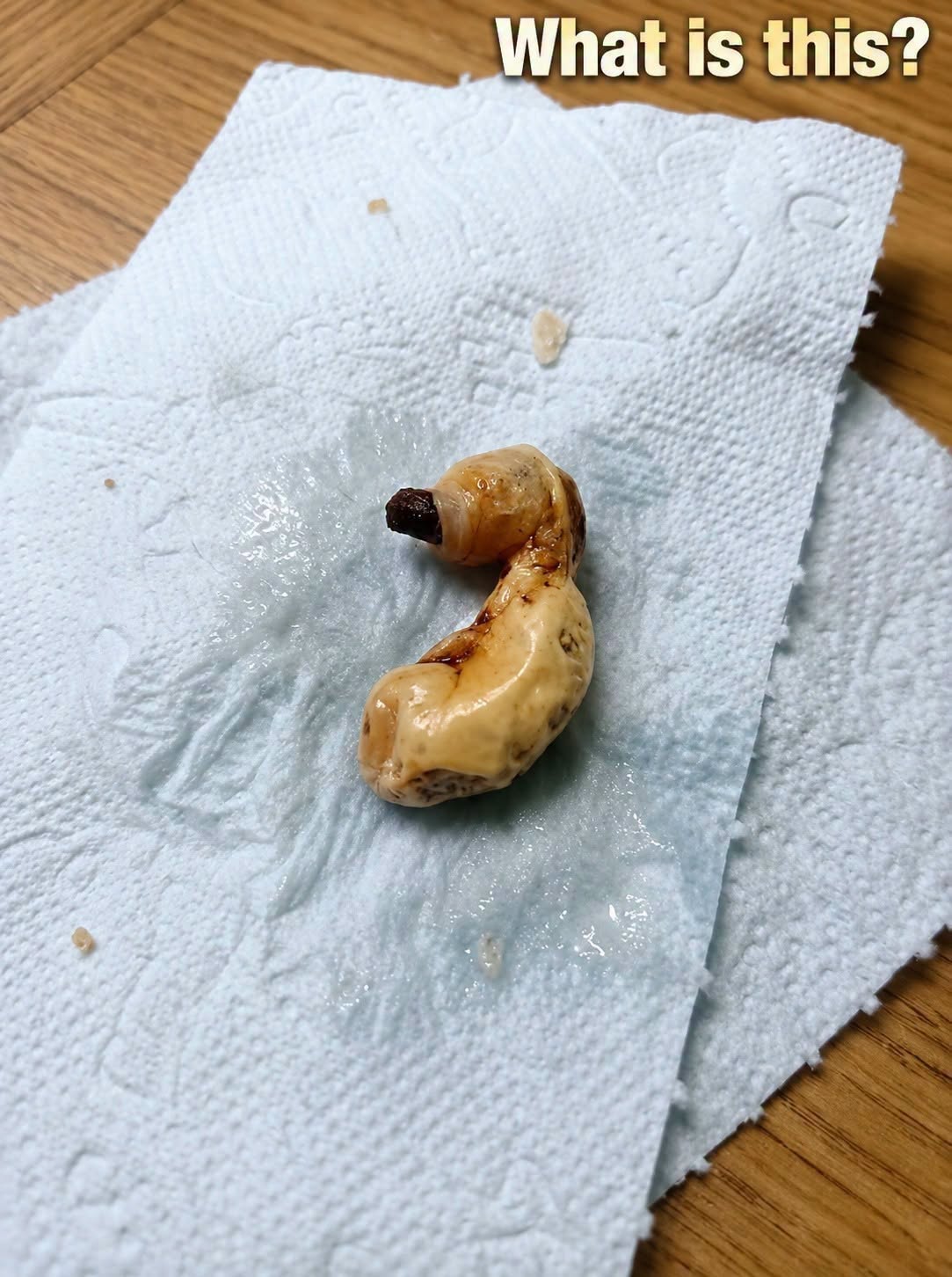
Someone spotted a dark object under the bed that looked almost like an eye.
Within seconds, everyone was convinced something strange was hiding in the shadows. And naturally, someone screamed.
But when the lights came on, the terrifying mystery became much less dramatic.
The object appeared to be an old pistachio shell or another piece of food debris that had become discolored over time.
The “monster” was apparently nothing more than an abandoned snack.
Why Did It Look So Scary?
Fear can change the way we see ordinary things.
Once someone suggested the object might be alive, everyone started noticing details differently. A curved section looked like a body. A dark spot resembled an eye. A scratch became a strange marking.
This is known as pareidolia—the tendency to see familiar shapes, such as faces or animals, in random objects.
The object hadn’t changed.
Our interpretation had.
The Lighting Made Everything Worse
The room was dark, and the object was partly hidden under furniture.
Shadows can make ordinary things look unfamiliar. Under bright light, the mysterious shape looked harmless. Under the bed, it looked like something that definitely shouldn’t be there.
Then came the laughter.
“What is that?”
“Is it moving?”
“Don’t touch it!”
“Wait… that’s just a shell!”
The fear disappeared almost instantly.
How Fear Spreads
The reaction also spread from person to person.
One person became alarmed. Someone else noticed and became concerned. Soon, everyone was imagining the same terrifying possibility.
This can happen when people face something unfamiliar. We naturally watch how others react, but an initial guess can quickly feel like a confirmed fact.
The same thing happens online.
A strange object gets posted with the question, “What is this?” Soon, people offer dramatic explanations.
But attention isn’t evidence.
Sometimes the most interesting explanation is simply the wrong one.
So, What Was the “Monster”?
Based on its appearance, the object seemed consistent with an old pistachio shell or another piece of food debris. However, a photograph alone cannot confirm its identity with complete certainty.
The real lesson is simple: unfamiliar doesn’t automatically mean dangerous.
If you discover something strange, turn on the lights, keep a safe distance, and look for an ordinary explanation before jumping to the scariest conclusion.
Sometimes, the scariest thing under the bed isn’t a creature at all.
It’s what our imagination creates when we can’t see clearly.