I thought carrying out my husband’s final wish would be the hardest thing I would ever do.
I was wrong.
The hardest part came afterward, when the people who loved Mark began rewriting his final choices—and somehow turned me into the villain.
“Sally, wait!”
I kept walking down the hospital corridor.
If I stopped, someone would say Mark’s name. Someone would touch my arm and give me that unbearable look reserved for a woman who was eight months pregnant and had just become a widow.
“Sally.”
Dr. Rivers caught up with me, holding a plain envelope.
“Mark gave me this three weeks ago.”
My name was written across the front in Mark’s messy handwriting.
“What is it?”
“He made me promise not to give it to you until after.”
“After he died?”
Dr. Rivers nodded.
“He said you’d understand when you needed it.”
That sounded exactly like Mark—loving, mysterious and infuriating.
I took the envelope.
Two months earlier, our biggest argument had been our daughter’s name.
“Clementine,” Mark suggested.
“Absolutely not.”
“It’s strong.”
“For an orange.”
He laughed, though even then the laugh caught in his chest.
“Fine. Cecelia.”
I hesitated.
Our daughter kicked beneath his hand.
Mark grinned.
“She voted.”
“She kicked you.”
“Enthusiastic approval.”
I whispered the name again.
“Cecelia.”
And suddenly she had a name.
We had wanted her for years.
Then, six months into my pregnancy, Mark became seriously ill.
The doctors eventually told us he might have only months.
One evening on the porch, with his palm resting over our daughter’s movements, Mark told me what he wanted after death.
“If they can use anything, I want to donate.”
“Please don’t talk about dying while she’s kicking.”
“That’s why I have to.”
“Mark—”
“If I can’t watch her grow up, maybe somebody else can get more time with their family.”
I looked away.
“I don’t know how to do this without you.”
“I know.”
“No, you don’t.”
His eyes filled.
“You’re right.”
That honesty broke me more than reassurance would have.
As Mark weakened, another problem emerged.
His mother, Violet, opposed the donation.
“She can’t handle the idea of something of mine going to strangers,” he told me.
“She’s losing her son.”
“I know.”
“Then give her time.”
Mark shook his head.
“She needs somewhere to put her anger.”
Then he squeezed my hand.
“I don’t want that place to be you.”
During his final weeks, Mark began meeting privately with Dr. Rivers.
I hated it.
“What are you arranging?”
“Something for you.”
“Without telling me?”
“Please trust me.”
I did.
So I let him keep one final secret.
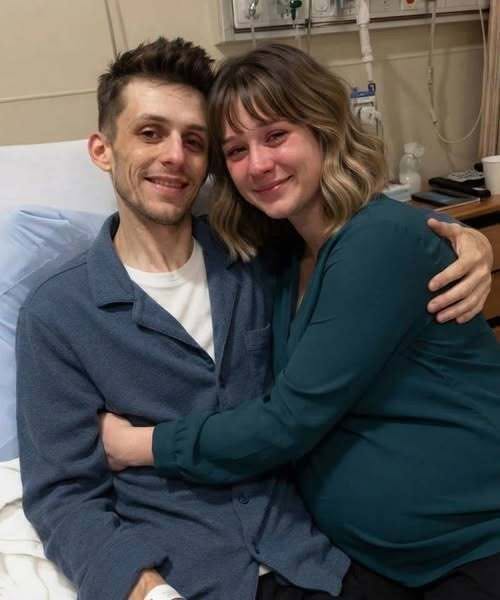
Mark died on a rainy Tuesday with my hand around his.
When the donation team asked whether this reflected his wishes, I answered without hesitation.
“Yes.”
That night, I opened Mark’s envelope.
Inside was a flash drive and a note.
Don’t watch this because you miss me. Watch it if somebody makes you doubt me. More importantly, watch it if somebody makes you doubt yourself.
“You’re dead,” I muttered. “You don’t get to give me instructions anymore.”
Cecelia kicked.
“Your father is still annoying me.”
I put the drive away.
Two days later, Violet came over.
I found her standing in Cecelia’s nursery, gripping a blanket.
“Did they take everything?”
“What?”
“From Mark.”
I understood.
“They only recovered what was medically suitable.”
“And you’re fine with that?”
“I am not fine with any of this, Violet.”
Her mouth trembled.
“You still have part of him.”
Her eyes dropped to my stomach.
My hand moved instinctively over Cecelia.
“Don’t.”
But grief had already begun looking for an enemy.
At Mark’s memorial, Violet questioned whether he had truly been capable of making the decision.
Soon relatives were asking whether medication had affected his judgment.
Whether I had influenced him.
Whether Mark had actually wanted any of it.
I stayed silent because I thought silence was compassionate.
Then I realized silence was allowing a lie to grow.
That night, I watched the video.
Mark appeared on my laptop, thinner than I remembered.
“If you’re watching because you miss me, turn this off.”
I laughed and cried simultaneously.
Then his expression became serious.
“Mom asked me not to donate. More than once. She also asked whether this was really my decision or Sally’s.”
I stopped breathing.
“I told her it was mine.”
He paused.
“I understand why she’s hurting. But grief doesn’t get to turn Sally into the villain.”
My hand covered my mouth.
“Don’t protect me by letting her hurt you, Sal. And don’t let Cecelia grow up believing her father was too weak to make his own decisions.”
I paused the video.
Then I became furious.
“You knew.”
I stood from the chair.
“You knew she might do this.”
For the first time since Mark died, I was angry with him.
He had tried to protect me by preparing evidence instead of trusting me with the fight while he was alive.
It hurt.
But it also gave me what I needed.
A boundary.
When Violet next came over and began questioning decisions Mark and I had made for Cecelia, I stopped her.
“You don’t get to rewrite him.”
“I lost my son.”
“I know.”
“You don’t understand that.”
“No. And you don’t understand what it feels like to bury my husband while carrying the daughter he will never meet.”
She went silent.
“We can hurt differently without destroying each other.”
Two weeks later, Cecelia was born.
When the nurse placed her against my chest, she tucked her thumb into her fist.
Mark had slept that way.
I laughed through tears.
“Of course.”
Violet came to the hospital cautiously.
“Can I hold her?”
That question mattered.
I handed Cecelia over.
Violet stared at her granddaughter.
“I knew your daddy when he didn’t have teeth either.”
For one beautiful minute, grief stopped competing.
Then weeks later, I heard Violet speaking to Mark’s aunt in my living room.
“Mark wasn’t himself at the end. Sally handled those decisions.”
Violet was holding Cecelia.
I walked into the room.
“Give her to me.”
“Sally—”
“My daughter.”
She handed Cecelia back.
“You will never say that around her again.”
“She’s a baby.”
“She won’t always be.”
Violet began crying.
“You wake up every morning and see him in her. What do I get?”
I stared at her.
“Me.”
She froze.
“You had me, Violet.”
Her face collapsed.
“I loved you too.”
Then I finally understood what Mark had been trying to tell me.
Violet needed someone to blame because anger felt more survivable than helplessness.
But understanding someone’s pain does not require surrendering to it.
“He knew you might say these things,” I said.
“What?”
I opened my laptop.
Mark’s voice filled the room.
“Donation was my choice.”
Violet closed her eyes.
“Mom, you loved me before anybody else did. But loving me doesn’t mean you get to decide which choices belonged to me.”
She covered her mouth.
“Don’t make Sally prove she loved me by agreeing with you.”
Then came the part that mattered most.
“And don’t put Cecelia in the middle. She isn’t something I left behind. She’s Sally’s daughter and mine, and she gets to become herself.”
“Turn it off,” Violet whispered.
I did.
“I want Cecelia to know you,” I said. “But you will never tell her I forced her father into something he didn’t want. And you will never make her responsible for keeping him alive for you.”
Violet wiped her face.
“I don’t know who I am without him.”
“Neither do I.”
I looked down at my daughter.
“But she doesn’t need us to know yet.”
Six months later, Violet sat on my living-room floor watching Cecelia wrestle with a wooden block.
Nothing had magically healed.
But things had changed.
Violet called before visiting.
She asked before picking Cecelia up.
And when she missed Mark, she finally learned to say, “I miss Mark,” instead of turning that pain into something someone else had to repair.
Cecelia grabbed the block, squeezing it fiercely.
Violet smiled.
“Look at that grip. Just like—”
She stopped.
For one second, I watched the old instinct cross her face.
Then she smiled differently.
“No.”
She touched Cecelia’s tiny hand.
“That’s hers.”
Cecelia squealed and threw the block into Violet’s lap.
We both laughed.
Mark had been gone six months.
We still missed him every day.
But we were finally learning that loving someone after death did not mean freezing everyone else inside their memory.
Mark’s final gift wasn’t only what he donated.
It was the boundary he left behind.
He gave Violet permission to grieve without owning his choices.
He gave me permission to defend myself without feeling cruel.
And he gave our daughter something even more important.
The freedom to be more than evidence that her father had once existed.
Cecelia could have his smile someday.
His stubbornness.
His laugh.
Or none of them.
It didn’t matter.
She was not the piece of Mark that remained.
She was herself.
And at last, Violet and I loved him enough to let her be.