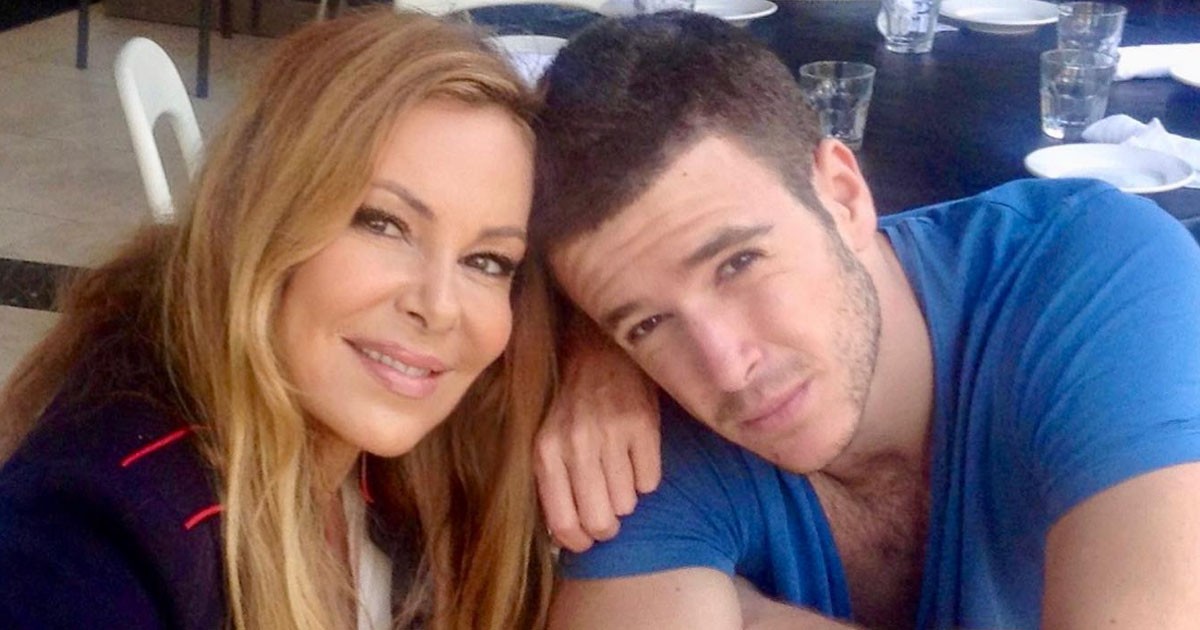
Ana Obregón, 71, drew widespread attention when she used her deceased son’s sperm to have his child after he died from cancer. Now, three years later, she has shared an update.
Background: Honoring a Son’s Final Wish
Ana Obregón, renowned Spanish actress and television personality, became the center of international attention after an emotionally charged decision following the untimely death of her only son, Aless Lequio, who succumbed to an aggressive form of cancer. In accordance with his wishes, Obregón used her son’s frozen sperm to conceive a child via surrogacy, a journey marked by complex ethical, legal, and emotional challenges that have prompted significant global discussion.
The circumstances surrounding this story are unique and deeply personal. Aless Lequio, who passed away at the age of 27, had previously expressed his desire to preserve his legacy even after his death. As reported by multiple reputable outlets, including interviews given to major magazines, Obregón has emphasized repeatedly that her motivations were focused on fulfilling her son’s clearly expressed wishes—a fact that has shaped her entire journey.
The Surrogacy Process and Legal Considerations
The conception of the child, Anita Sandra, involved not only the use of Aless Lequio’s preserved sperm but also required an egg donor. The procedure was conducted in the United States due to Spain’s strict laws prohibiting all forms of surrogacy, creating legal complexities for Spanish nationals seeking such pathways to parenthood.
In the United States, surrogacy is legal in several states and is often sought by international intended parents for its relative legal clarity and established medical practices. American clinics specializing in assisted reproductive technology have clear protocols for the use of reproductive material, especially when it involves posthumous conception. According to reproductive law experts, explicit documented consent from the deceased is essential for proceeding with fertilization and subsequent surrogacy. In Obregón’s case, reports confirm that Aless had left clear directives regarding the use of his genetic material.
Once the child was born, Obregón faced further bureaucratic challenges upon returning to Spain. Since Spanish law does not recognize surrogacy arrangements, she was required to undergo legal processes to ensure her granddaughter-daughter, Anita, would have the necessary recognition and protection under Spanish law. These developments have underscored the importance of legal harmonization and the evolving discourse around family structures internationally.
Ethical and Societal Debates Surrounding Posthumous Reproduction
Obregón’s decision reignited long-standing debates on the ethics of posthumous reproduction. Bioethicists worldwide have engaged in this discourse, examining questions of consent, the rights of the deceased, the welfare of the resulting child, and the broader implications for family and society.
Some ethicists argue that, provided the deceased gave explicit consent, honoring their wishes can be a respectful and ethical course of action. Others contend that children born via such methods may face unique psychological and social challenges, including grappling with the knowledge of their origins and the absence of one biological parent. The practice, while legal in some jurisdictions, remains contentious—highlighting differences in legal frameworks and cultural attitudes toward family, inheritance, and legacy.
Public opinion, as reflected in global media coverage and social media reactions, has been notably polarized. Supporters have lauded Obregón for courage and devotion, asserting a mother’s right to fulfill her son’s last wish and highlighting the loving environment provided for Anita. Critics, meanwhile, have raised concerns about the commodification of reproduction and the potential long-term impact on the child’s sense of identity and belonging. These varied perspectives underscore the ongoing evolution of societal values in an age of rapidly advancing reproductive technologies.
Ana Obregón’s Reflections and Personal Journey
Since welcoming baby Anita Sandra in 2023, Ana Obregón has dedicated herself to the role of grandmother and guardian, describing the experience as a source of profound healing following her years of grief. In heartfelt interviews and public statements, she has expressed that Anita is not her daughter, but her granddaughter—highlighting the familial continuity with Aless. Obregón’s openness about her loss and her new life as Anita’s primary caregiver has resonated with many people facing similar grief or unconventional family circumstances.
In interviews, including one with ¡Hola! magazine, Obregón recounted, “The girl isn’t my daughter, she’s my granddaughter. It was Aless’ last wish to bring a child into the world.” She shared the deep emotional complexity and resilience required during this journey, acknowledging both the joys and challenges of parenthood at age 71. These candid reflections have added nuance to the public conversation about later-life caregiving and evolving models of kinship.
Living with Loss: A Message of Hope and Resilience
As Amanda celebrated Anita’s third birthday, she posted a moving tribute on social media, reflecting on grief, hope, and the ways in which Anita has helped her move forward. Obregón wrote, “Three years ago today I came back to life by hugging you for the first time. Because in doing so, I also hugged a piece of your daddy.”
She went on, “You’ve filled my dark world and my hell with lights, smiles, rubs, hugs, diapers, pacifiers and toys all over the house. You are good, smart, sensitive, and you have the same sense of humor as your Father.” Obregón promised to tell Anita, when the time is right, about the bravery of her father and the meaning behind her birth. Her hope, as she shared, is that Anita will always be happy and healthy, always remembering that she is the cherished link between generations.
Throughout the past three years, Obregón has occasionally allowed glimpses into Anita’s life, sharing carefully selected photos and anecdotes while protecting her privacy. In one instance, she posted a photo of Anita dressed in a Superman costume, alongside an old photo of Aless in a similar outfit. “I am lucky enough to love my two superheroes with all my soul,” she captioned the post, encapsulating her ongoing sense of connection and gratitude.
Global Reaction and Societal Context
Ana Obregón’s story has sparked significant debate not only in Spain, but globally. Reactions among the public and media have ranged from admiration for Obregón’s perseverance and the warmth of her family story, to critical scrutiny of the ethical and legal questions raised by posthumous conception and cross-border surrogacy. The debate reflects evolving attitudes towards reproductive rights, medical technology, and the shifting nature of what constitutes a family in the 21st century.
Internationally, some commentators have pointed to the case as evidence of the need for clearer regulation and support for families formed through assisted reproductive technologies. Others have called it an opportunity to deepen the collective understanding of grief, healing, and the enduring bonds that connect generations. This ongoing discourse is likely to continue as technological and legal frameworks adapt to the realities of modern family-making.
Experts in family law and bioethics have suggested that cases like Obregón’s might become more common as fertility preservation becomes routine, particularly among young cancer patients who hope to preserve the option of biological parenthood. However, they emphasize the need for robust ethical oversight, clear legal consent, and comprehensive support for all involved parties—especially the children whose origins are shaped by such deeply atypical circumstances.
The Legal Future of Surrogacy and Posthumous Conception
Ana Obregón’s experience has renewed calls for legislative reviews concerning surrogacy and posthumous conception, both in Spain and internationally. Policymakers and legal experts face the challenge of balancing evolving societal norms with the protection of individual rights and the well-being of children. Some advocacy groups have argued for greater flexibility and protection for non-traditional family forms, while others stress the need for stringent safeguarding to prevent abuse or exploitation in assisted reproduction.
In Spain, lawmakers continue to debate the potential for reforms to surrogacy legislation. Recent years have seen increasing demand among Spanish citizens for access to surrogacy, leading many to seek arrangements abroad. The resulting legal limbo for families returning to Spain with children born through surrogacy has prompted calls for more comprehensive, child-centered legislation that addresses the complexity of these cases. Comparatively, countries such as the United States, United Kingdom, Canada, and certain parts of Europe have adopted varying approaches, reflecting a diversity of legal, cultural, and ethical priorities.
The ongoing conversations sparked by Obregón’s story illustrate the urgent need for multidisciplinary collaboration among lawmakers, clinicians, ethicists, and families to ensure that emerging technologies serve the best interests of all involved.
Expert Insights and the Human Story Behind the Headlines
As medical innovation accelerates, families like that of Ana Obregón are at the forefront of redefining reproductive possibilities. Experts in reproductive medicine point out that advances in cryopreservation, in vitro fertilization, and surrogacy have transformed the landscape of fertility options. However, they caution that the psychological and social impacts require as much attention as the technological possibilities.
Dr. Jane Smith, a leading expert in reproductive ethics, notes, “While medicine offers new hope to families affected by loss, it is essential that society recognizes the profound human dimensions of these decisions. Support networks, transparent information, and careful legal and ethical review must accompany every step.”
Ana Obregón’s journey is ultimately a testament not just to grief and loss, but to love and hope—the drive to honor a loved one’s memory and ensure that their wishes endure. As her story continues to unfold, it invites all of us to consider the meaning of family, the possibilities and limits of science, and the enduring power of love to shape the human experience.
Conclusion
The case of Ana Obregón stands at the intersection of medicine, law, ethics, and human emotion. As society grapples with the realities brought forth by advances in reproductive technology, stories like hers remind us that scientific progress is always intertwined with deeply personal narratives. The ongoing discussions inspired by her choices may ultimately help guide more informed, compassionate, and inclusive policy and social understanding for families of all shapes and origins.
Sources
- BBC
- Reuters
- The Guardian
- The New York Times
- Al Jazeera
- Mayo Clinic