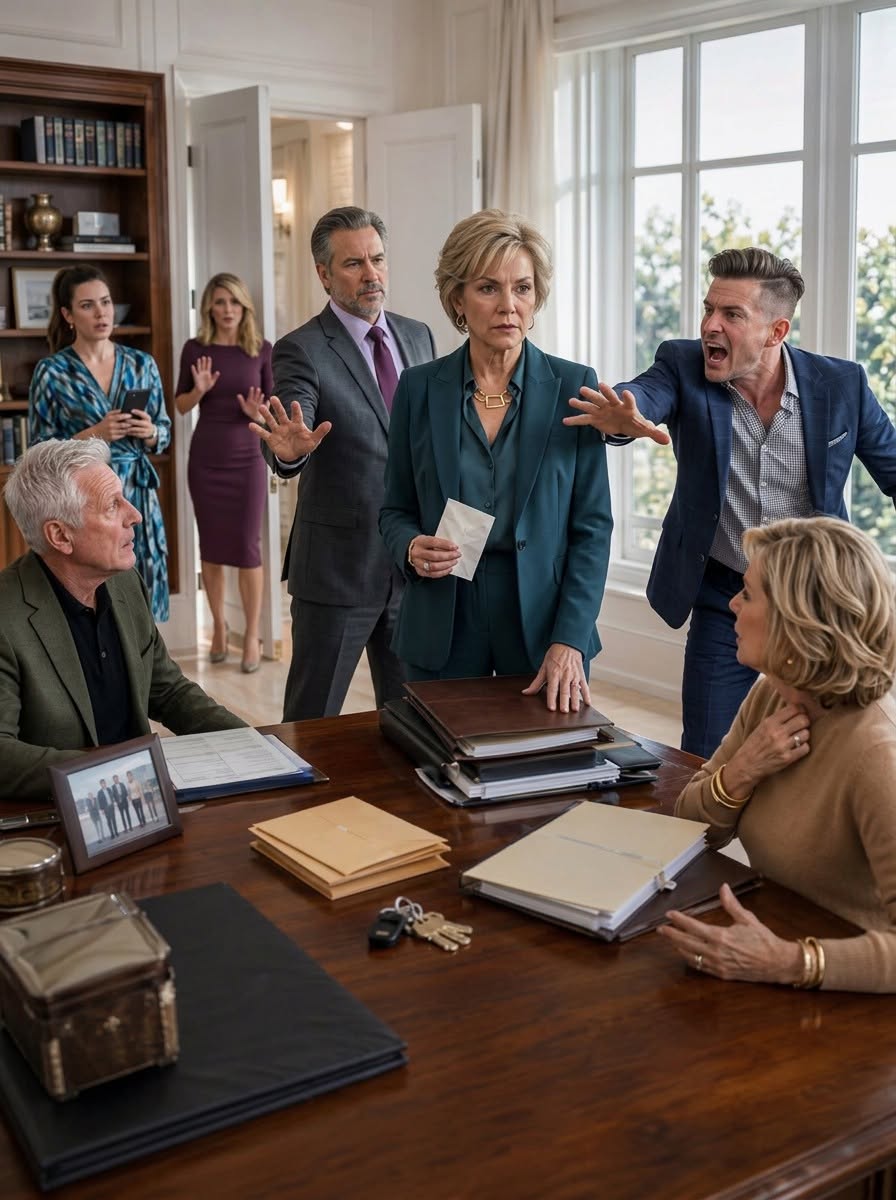
Part 1
The message was lying on my pillow when I returned home Tuesday evening.
A single piece of white printer paper, folded once through the center.
For a moment, I assumed it was some shopping list I had forgotten.
Then I noticed the word written across the front in my son’s familiar handwriting.
Mom.
I was sixty-seven years old. I had spent thirty-four years working in public education, most of that time as an assistant principal, so I had learned not to pan!c merely because somebody expected me to.
I sat along the edge of my bed and unfolded it.
Mom,
I’ve wanted to tell you this for some time. You have to stop building your future around me and this house. I have responsibilities of my own now. I have a wife and a son to consider. You need to make your own arrangements instead of expecting us to structure our lives around yours.
Daniel.
That was my son.
My only child.
I read his message twice.
The bedroom remained silent except for the ceiling fan clicking softly overhead. Through the window, I could see the warm golden lights of the main house shining across the backyard.
Daniel and his wife, Marissa, were likely sitting in the living room I had paid to remodel.
Maybe drinking wine near the fireplace my late husband had built.
Maybe congratulating themselves for finally establishing a boundary with me.
I carefully folded the paper.
Then I set it on the nightstand.
I didn’t weep. I didn’t storm across the yard. I didn’t telephone Daniel.
I brushed my teeth, slipped into my pajamas, switched off the lamp and went to bed.
And oddly enough, I slept more peacefully than I had in months.
At seven the following morning, I brewed coffee.
At seven-fifteen, I phoned my attorney, Rachel Bennett.
“Rachel,” I said, “I want to revise my estate plan.”
There was silence.
“Everything?”
“Nearly everything.”
By noon, Daniel was no longer serving as executor of my estate.
The substantial financial gift I had planned for him was redirected into a trust for my grandson, managed by an independent trustee.
The property itself would no longer transfer automatically to Daniel.
And several accounts I had established for his benefit were eliminated completely.
At one-thirty, the door to my cottage burst open without a knock.
“Mom!”
I was washing my coffee mug.
Daniel charged into the kitchen, his face flushed, phone still gripped tightly in his hand.
“What happened?”
I shut off the faucet.
“I’m fine. How are you?”
“Don’t do that.”
“Do what?”
“My attorney was contacted because you changed your estate documents.”
I wiped my hands on a towel.
“Yes.”
“You took me off as executor.”
“Yes.”
His eyes tightened.
“Why?”
I walked into my bedroom, picked up the folded note, came back and handed it to him.
He looked down at his own handwriting.
His expression shifted immediately.
“Mom, come on.”
“I did precisely what you asked me to do.”
“What is that supposed to mean?”
“You told me not to build my future around you.”
“That isn’t what I meant.”
“Then you should have written what you actually meant.”
His jaw clenched.
“It’s only a note.”
I nodded.
“And this is only a will.”
He stared at me.
I could see frustration gathering behind his eyes, but underneath it was something different.
Confusion.
Because Daniel had anticipated anger.
He had anticipated guilt.
What he had never anticipated was a consequence.
“You’re taking this much too far,” he said.
I placed my empty cup on the counter.
“No, Daniel. I believe I’ve spent six years not taking things nearly far enough.”
He became completely still.
And that was when I understood the note hadn’t really started anything.
It had simply ended my willingness to keep pretending.
Because six years before, I had offered my son a temporary lifeline.
Somewhere along the way, he and his wife had decided it belonged to them.
Part 2
Six years before, Daniel and Marissa were preparing for their first child.
Their apartment lease was expiring. Rent had risen again. Daniel called me one evening, sounding completely exhausted.
“I don’t know how we’re going to manage this, Mom.”
I understood.
His father, Thomas, had been gone for three years by then, and I still owned far more house than I needed.
The property included a four-bedroom main house, a wraparound porch and almost an acre of land. Behind it sat a detached cottage where Thomas’s parents had once stayed.
I made them an offer.
I would renovate the cottage for myself.
Daniel and Marissa could stay in the main house rent-free while they built their savings.
“You would really do that?” Daniel asked.
“You’re my son.”
He hugged me so tightly that I could hardly breathe.
Marissa cried.
“We’ll never forget this,” she said.
Back then, I believed her.
The first year went smoothly.
I babysat happily.
We shared Sunday dinners.
Daniel fixed my porch railing. Marissa brought me coffee.
Then small things started changing.
A chair that had belonged to my mother v@nished from the dining room.
When I questioned Marissa about it, she shrugged.
“It looked outdated.”
“Where is it?”
“I donated it.”
I stared at her.
“That wasn’t yours to give away.”
She laughed softly.
“Eleanor, it’s only furniture.”
I should have confronted it then.
Instead, I allowed it to pass.
That became a pattern.
Before long, I would open my door and discover my grandson Noah standing there carrying a backpack.
“Mommy said I’m staying with you.”
No call. No request.
Only delivery.
I loved Noah dearly, so I almost always said yes.
Marissa caught on quickly.
Then she started walking into my cottage without knocking.
Sometimes she wanted sugar. Sometimes laundry soap. Sometimes batteries.
Once I returned from a doctor’s visit and discovered her crouching beside a cabinet in my living room.
“What are you doing?”
“Trying to find tape.”
“You could’ve called.”
“You didn’t answer.”
“My phone was on silent.”
She smiled as if I were acting ridiculous.
“We’re family.”
Daniel almost never stepped in.
That troubled me more than anything Marissa ever did.
My son had always been thoughtful. But somewhere throughout those years, his need to keep his wife satisfied became stronger than his willingness to tell her whenever she was wrong.
I watched it develop gradually.
At dinner, whenever Marissa joked about my habits, Daniel smiled uncomfortably.
If she volunteered me to babysit, he avoided meeting my eyes.
If she purchased something expensive while I covered several household expenses, Daniel said they “needed some breathing room.”
I continued giving them breathing room until I hardly had any left myself.
Then came the afternoon that changed how I viewed the entire arrangement.
I was watering my roses when Marissa came into the backyard with two friends.
They were sipping iced coffee and talking about renovations.
One woman gestured toward my cottage.
“What’s that small house?”
“That’s where Eleanor stays,” Marissa said.
The woman smiled. “Cute.”
Marissa cocked her head.
“You know what I’d like to do with it eventually?”
I froze.
“A gym. Tear down one wall, install mirrors across the back, maybe put in a sauna.”
One of her friends laughed.
“What about Eleanor?”
Marissa took another sip.
“She’s getting older. Eventually she’ll want someplace easier.”
I glanced toward Daniel.
He stood beside the grill. He had heard every word. He didn’t correct her. He didn’t even appear uncomfortable. He merely flipped a burger.
That evening, something icy settled inside my chest.
They were no longer appreciative guests.
They were waiting.
Waiting for my house.
Waiting for my cottage.
Maybe even waiting for my absence.
Then, three months afterward, Daniel placed that note on my pillow.
Stop planning your future around me.
The morning after changing my will, I opened my laptop once more.
And I decided that if Daniel wanted independence that badly, I would stop getting in its way.
Part 3
For years, I had been paying expenses I had nearly forgotten belonged to me.
Water.
Trash service.
Internet.
Daniel and Marissa’s share of my family phone plan.
When they initially moved in, I had offered to pay those expenses temporarily.
Six years afterward, I was still paying them.
Then there was the SUV.
Three years before, Daniel’s car had quit.
No dramatic acc!dent. The aging vehicle simply reached the end of its usefulness.
At the time, Daniel explained they couldn’t handle another monthly payment.
So I purchased a dependable SUV.
“It’ll make life easier with Noah,” I told him.
Daniel hugged me.
“Mom, I promise I’ll pay you back.”
He never did.
More importantly, the vehicle title stayed in my name.
That Wednesday morning, I stopped the automatic payments associated with the main house.
Then I removed Daniel and Marissa from my phone plan starting at the end of their billing cycle.
I contacted my insurance agent regarding the SUV and arranged to remove Daniel as an authorized driver after I reclaimed possession of it.
When I finished, I looked at the screen.
I expected guilt.
Instead, I experienced something resembling relief.
For years, I had convinced myself I was helping.
But helping somebody cross a river is different from carrying them forever because they refuse to let their shoes get wet.
Friday morning, Daniel showed up on my porch.
“My phone stopped working.”
I glanced up from my mystery novel.
“Good morning.”
“And the internet in the house is down.”
“My internet works fine.”
He blinked.
“What?”
“I transferred responsibility for the main-house utilities to you.”
“You canceled everything?”
“I stopped paying for everything.”
His expression tightened.
“Seriously?”
Before I could respond, the main-house door slammed.
Marissa strode across the yard wearing a cream-colored robe and slippers.
“Eleanor!”
I shut my book.
“What happened to the Wi-Fi?”
“You’ll have to open an account.”
She stared at me.
“You turned it off?”
“I stopped paying for it.”
“You didn’t even give us a warning.”
“You’ve had six years.”
Her mouth dropped open.
“We have a child.”
“And two working adults.”
Daniel breathed out sharply.
“Mom, this is becoming ridiculous.”
I looked directly at him.
“You told me not to arrange my life around you.”
“I meant emotionally.”
Marissa whipped her head toward him.
“What is she talking about?”
Daniel’s expression changed.
Interesting.
He hadn’t told his wife exactly what he had written.
I nearly smiled.
Instead, I said, “Daniel left me a note saying that his wife, son and responsibilities come first and that I need to make my own plans.”
Marissa’s eyes tightened.
“And because of that, you’re trying to punish us?”
“No.”
I reached toward my coffee.
“I’m adapting.”
She crossed her arms.
“Well, if this is how you plan to behave, maybe Noah shouldn’t spend this weekend with you.”
There it was.
Her favorite weapon.
I loved my grandson so deeply that she had learned his absence scared me.
Normally, I would soften immediately.
That morning, I didn’t.
“That’s your choice as his mother.”
Marissa stared at me.
I opened my book again.
“Eleanor.”
I flipped a page.
She waited.
When I refused to look up, she turned around and marched back toward the main house.
Daniel stayed.
“You’re seriously going to let her keep Noah away from you?”
I lifted my eyes.
“No, Daniel. She’s going to decide whether to keep Noah from me. I’m simply refusing to pay for access to my grandson.”
His expression changed.
I don’t believe he had ever heard me say it so directly.
Neither had I.
The following morning, I drove to the hardware store and purchased two new deadbolts.
By lunchtime, the locks on my cottage were replaced.
And fewer than three hours later, somebody tested the old key.
Part 4
The handle twisted once.
Then twice.
I was sitting on my couch holding a cup of tea.
A second later, Marissa knocked.
“Eleanor?”
I stayed still.
The knocking grew louder.
“Eleanor, open this door.”
I walked toward the entrance but left it locked.
“What do you need?”
“I have an appointment. I need you to watch Noah.”
“For how long?”
“Maybe two hours.”
“I’m not available.”
Silence.
Then she replied, “You’re sitting inside.”
“Being home doesn’t mean I’m available.”
“Eleanor, please unlock the door.”
“No.”
Her tone sharpened.
“This is childish.”
“My locked front door?”
“You’ve never locked us out before.”
“That’s correct.”
“So open it.”
“No.”
I heard her inhale.
“My home isn’t a drop-off center, Marissa.”
“He’s your grandson.”
“And I love him.”
“Then why won’t you watch him?”
“Because you never asked.”
Her heels struck the porch sharply when she turned away.
That little deadbolt gave me greater satisfaction than anything I had bought in years.
It was simply metal, brass and screws.
But to me, it represented a boundary someone couldn’t simply talk her way through.
For several days, the property became unusually peaceful.
Daniel arranged replacement phone service.
The Wi-Fi came back to the main house.
Nobody asked me to babysit.
I cared for my roses, met a former colleague for lunch and spent an entire afternoon reading without interruption.
Then Saturday evening, music drifted across the yard.
Marissa entertained frequently, so initially I ignored it.
Around seven, the laughter became louder.
I walked over to my kitchen window.
Two men were moving my wrought-iron patio table toward the main house.
One of my chairs already stood beside their deck.
Then I smelled charcoal and cooked meat.
My six-burner grill was blazing beside the patio.
I almost walked outside immediately.
Instead, I watched.
Roughly a dozen guests stood throughout the yard.
Marissa held a wineglass in one hand.
Daniel stood beside the grill.
Then I heard one woman say, “You guys have so much space.”
Marissa laughed.
“That’s exactly why we’ll never leave.”
Something inside me became still.
She motioned toward my cottage.
“Once Eleanor finally downsizes, we’ll have even more.”
A man asked, “What are you doing with the cottage?”
“I want a gym.”
She laughed.
“Daniel thinks maybe a guesthouse, but honestly, I think we’ll probably open it up and renovate everything. Eleanor doesn’t need that much room.”
Several guests glanced toward the cottage.
My home.
Twenty yards away.
I slipped on my shoes.
When I crossed the lawn, conversations started disappearing one after another.
Daniel spotted me first.
“Mom.”
“Good evening.”
Marissa smiled stiffly.
“We borrowed the patio furniture.”
“So I noticed.”
“We were going to return it.”
“I’m sure.”
I walked over to the table.
Daniel’s SUV keys were sitting beside a bowl of chips.
I picked them up.
His expression changed.
“Mom?”
“I’m taking back my property.”
“What are you doing with my keys?”
“Your keys?”
I glanced down at the key fob.
“This vehicle is titled to Eleanor Hayes.”
Suddenly, everyone seemed deeply interested in the grass.
Daniel lowered his voice.
“Not here.”
I tucked the keys into my pocket.
“I didn’t select the audience.”
Then I looked over at my grill.
“Please make sure the gas is turned off properly when you’re done.”
Marissa’s face flushed.
“You can’t simply come over here and embarrass us.”
I looked at her.
“I walked across my own yard and collected my own keys.”
Nobody said anything.
I went back to my cottage without raising my voice once.
Sunday morning, Daniel knocked.
Loudly.
When I opened the door, he was wearing golf clothes.
“Give me the SUV keys.”
“No.”
His expression went blank.
“What?”
“The vehicle belongs to me.”
“I need it.”
“No, Daniel. You need transportation.”
He moved closer.
“You’re seriously taking my car?”
And suddenly I understood something.
He genuinely believed it was his.
Not because anybody had ever actually given it to him.
Because I had allowed him to use it long enough that gratitude had gradually transformed into ownership.
Which made me wonder what else he believed belonged to him.
Part 5
Daniel stared at me from my porch.
“I have work tomorrow.”
“I know.”
“How am I supposed to get there?”
“You’ll work it out.”
His eyebrows lifted.
“Are you listening to yourself?”
“Very clearly.”
“I’ve been driving that SUV for three years.”
“And I’ve been owning it for three years.”
He rubbed both hands across his face.
“This is crazy.”
“No. What’s crazy is that you’re thirty-eight years old and honestly believe the person who stops covering your expenses has caused an emergency.”
His hands fell.
That one landed.
Good.
“Marissa says you’re trying to tear our family apart.”
I nearly laughed.
Instead, I said, “Marissa announced to an entire yard of people that she intends to turn my home into a gym after I’m gone.”
Daniel looked away.
“You heard her, didn’t you?”
Silence.
“Daniel.”
“Yes.”
“Did you correct her?”
He looked toward the oak tree.
“No.”
That answer hurt much more than I had anticipated.
“Why?”
“Because she’d been drinking. Because everyone was enjoying themselves. Because I didn’t want another argument.”
I nodded slowly.
“You were prepared to let your mother be disrespected because correcting your wife would’ve been uncomfortable.”
“It isn’t that simple.”
“It actually is.”
He stayed silent.
“I’m selling the SUV.”
His head snapped around toward me.
“What?”
“I have someone coming tomorrow to see it.”
“You cannot be serious.”
“I am.”
“We can’t afford another car right now.”
I studied him for a long moment.
“Daniel, where did all the money go?”
“What money?”
“The money you were meant to be saving by living rent-free for six years.”
He opened his mouth.
Then shut it.
I remembered the new television.
Marissa’s remodeled kitchen.
The vacations.
The costly patio set that somehow hadn’t prevented them from borrowing mine.
I hadn’t viewed those purchases as malicious at the time.
Now they appeared different.
“I don’t know,” he eventually said.
“Then I suggest you figure it out.”
He stared at me as though I had struck him.
I shut the door.
Later that afternoon, I sold the SUV.
The offer was fair.
The buyer drove away with it before dinner.
I stood beside my window looking at the empty space in the driveway and realized I didn’t feel triumphant.
I felt exhausted.
Because the real problem wasn’t the vehicle.
Or the internet.
Or the locks.
Every morning, I still woke up and saw the main house outside my kitchen.
Sometimes I noticed Marissa watching me from the window.
We lived twenty yards apart and might as well have been rivals standing on opposite sides of a fence.
That wasn’t how I wanted to live the remainder of my life.
That evening, I pulled an old photo album from the closet.
Thomas and I had purchased the property when Daniel was five.
There was a picture of Thomas standing on the front steps holding a hammer, his hair blowing over his forehead.
I traced my thumb across the photograph.
“I don’t think you would recognize this place now,” I whispered.
Then I corrected myself.
The house was fine.
I was the one who had changed.
Or perhaps I was finally becoming the woman Thomas had always known I could be.
Independent.
Practical.
Capable of leaving something behind even when I loved it.
I picked up my phone and called Vivian Brooks.
Vivian had worked as a real estate agent for almost thirty years and had been my friend nearly as long.
She picked up on the second ring.
“Eleanor? Is everything okay?”